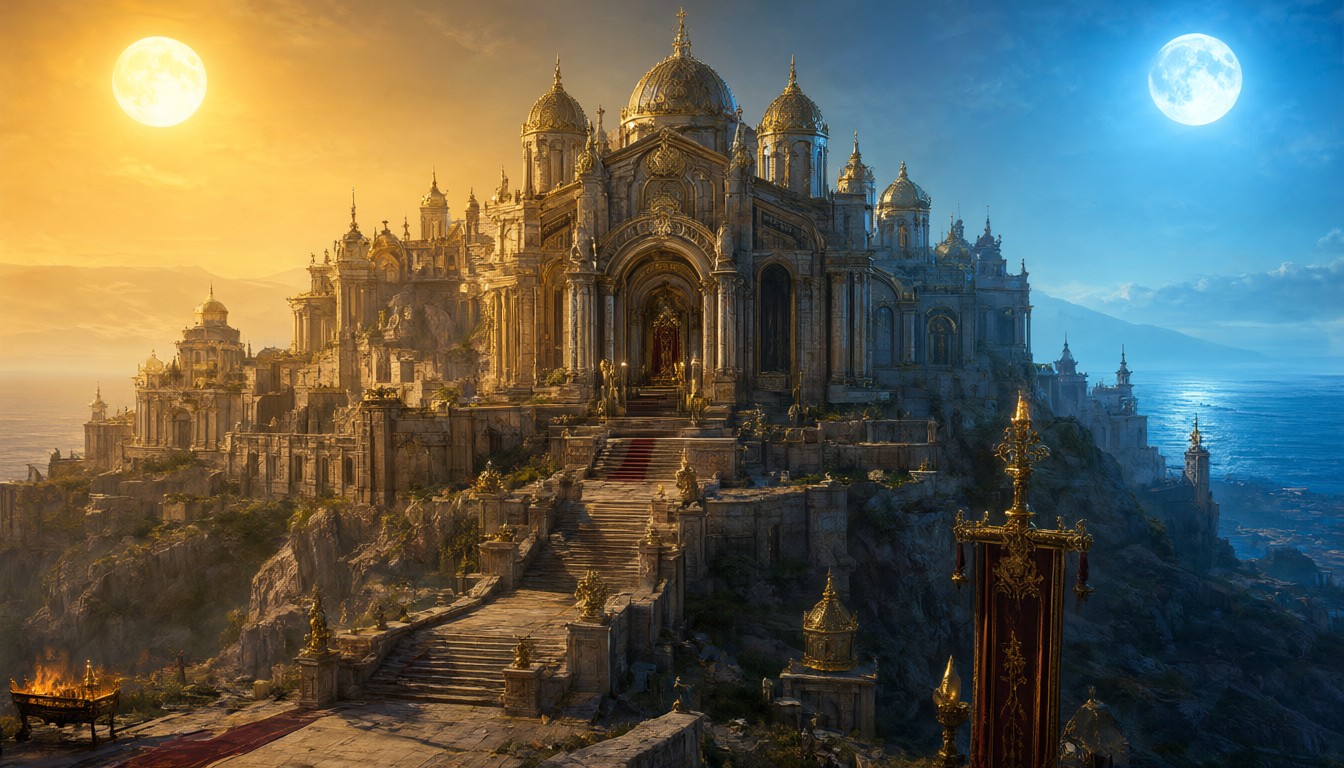
King's Home. A crowned hill and a working harbor, joined by four miles of doubled wall.
Capital of Seug, King's Home. West coast of Seug, on the Voir Sea.
Khome is a double city: a crowned hill and a working harbor, joined by four miles of doubled wall. The upper city is where Seug elects a king and treats him as a god for fifteen years. The lower city is where that office still has to eat, arm, and keep a fleet between itself and Voir. The stone between them was raised so a land army could not cut those two facts apart.
The name is the worn-down form of King's Home. Seug never pretended the capital was anything else.
The westernmost headland, where the Homewater meets the Voir Sea.
Khome occupies the westernmost headland of Seug. A river, the Homewater (older charts: the Khome Reach), comes out of the forested highlands and the lake country and meets the Voir Sea in a broken mouth. Offshore islands turn that mouth into a sheltered roadstead. Behind the city the land rises toward the interior woods. North, across the water, is Voir. South and west is the Seug Sea and a scatter of lesser isles.
From the Crown Precinct you can see the harbor on a clear day. From the Quay you can see the Precinct's pale stone on the rise. The Four-Mile Walls make that line of sight a civic fact instead of a view.
Scale. The upper city is a compact capital on a low acropolis and its skirts. King's Quay is a full port in its own right. The Walls run about four miles, two curtains with a road between them, river on one flank for part of the run, open ground on the other.
Seug is a country of High Lords, Overlords, paid seers, and knives. It does not keep a Monitor-style mountain garrison. It keeps Khome.
The capital does three jobs at once:
An election city first, and then the city that survived Voir.
King's Home was already the election city: a river-mouth town with a sacred precinct on the rise and a harbor in the islands' lee. Noble blood was already a target. Divination was already a trade.
Born in Seug on the 7th day of Azure Summer, Year 0, the day the modern count still starts. Highlord at twenty-two, Duke at thirty-five, King-Priest at forty-eight. He held the crown for decades. At sixty-two the long fight with Voir broke into open ground war: Seug sovereignty against advancing Monitors. An aging king could no longer win that war with a personal blade. He won the city's survival with yards, grain, and stone.
Seug honors Horkos the way a country honors the man who kept it from being swallowed. He is history, not the subject of the city. The Walls, the moles, and the basin are his work. People walk them, name them, and keep them. They do not spend the day talking about him.
The Four-Mile Walls, the island moles, and the navy basin at King's Quay are that work made visible. They are a tactician's answer and a capital's boast at the same time: doubled curtains, a road that can move a column under cover, towers at bowshot, posterns for sorties, and all of it faced, gilded, and cut so that a ship coming in from the Voir Sea sees a holy city before it sees a fortress. Stone meant to make a siege stupid, and meant to be looked at.
King-Priest Sondarianus Sambor and Queen Raquel, who succeeded King-Priest Mobius Shcherbatsky and Queen Robin. Cold war, not open field. The Walls are manned. The Quay is busy. Seers sell futures in the High Courts. Bloodline-hunters work the lower wards. The old Voir faithful of Caro Vanta still live in the gold-leaf quarter their grandparents built when they ran south. Iüdex is still worshipped here. Seug did not give the god up because Voir's Monitors took the faith to an extreme.
Pale stone, tight streets, roofs stepped down the rise toward the river.
The inner wall is older than Horkos's Long Walls; pieces of it are still in the foundations of noble houses. Smoke from cookfires and incense. Bells for votes, funerals, and the rare genuine miracle.
Gold half-year and azure half-year both hit this west coast hard off the water. The Precinct is built to take both: pale facing that goes warm under the Yellow Sun and cold-bright under the Azure.
The acropolis. Palace and temple in one compound. The throne-chapel is where the sitting King-Priest is treated as a god: daily forms, public audiences, the office and the man held as one body for the term. The voting floor sits in the same precinct: Overlords and High Lords under one roof, which Seug considers either sacred or a convenient place to count who is standing too close to whom.
The archives keep election rolls, seers' paid testimonies, and the names of Dukes. Serving as Duke is the last mandatory rank before the throne is even legal. The Precinct smells of wax, wet stone, and whatever incense the current pair prefers.
Horkos's building-marks and name are part of the stone, the way a founder's name sits on a gate. Newer kings are painted. Paint can be changed in fifteen years.
Noble manors against the inner wall. Each serious house keeps a seer. Divination is not a parlor trick here; it is how a High Lord decides whether a low-born stranger in another state is a future problem. Assassinations dressed as manners start in these rooms and finish in alleys closer to the river.
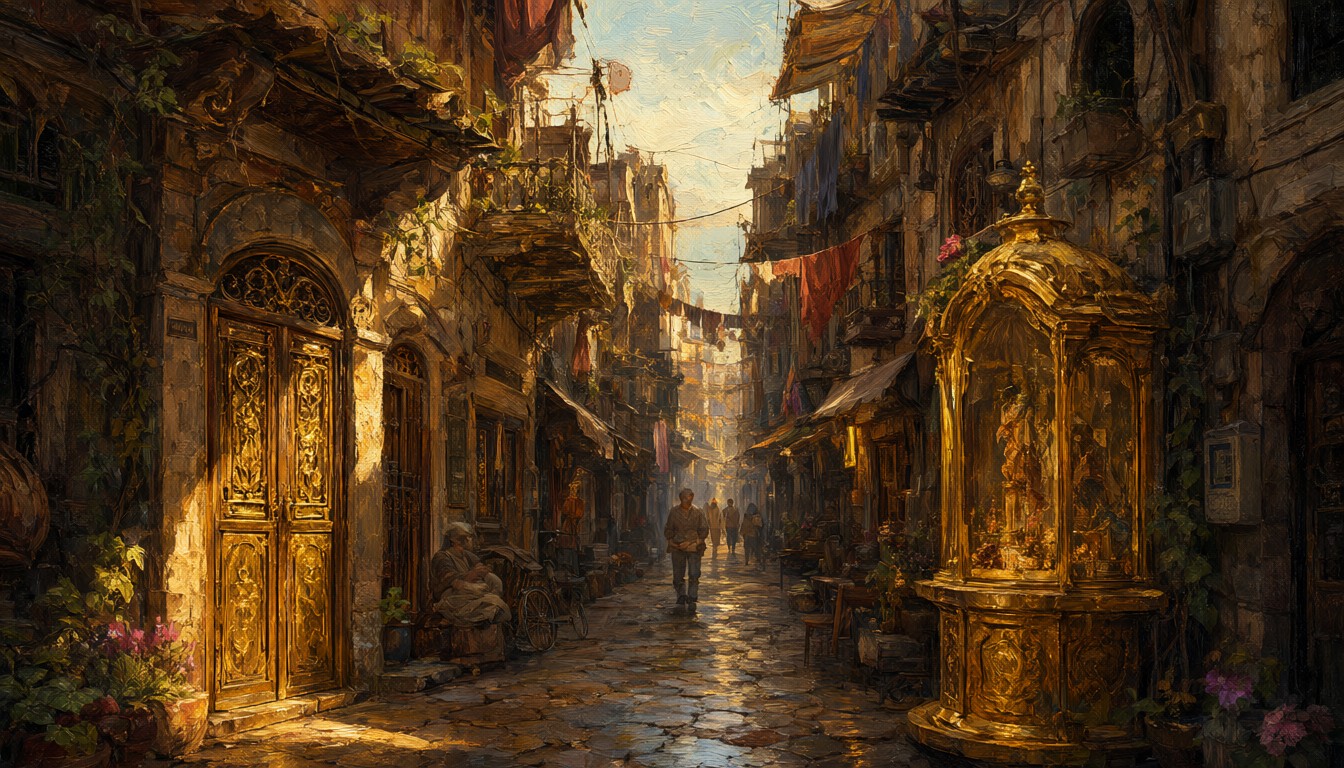
When the Monitors burned Voir's temples to Caro Vanta, processions came south with relics and gold-leaf. Khome took them. This quarter is gilded without being the Gilded Sanctuary itself (that shrine still stands elsewhere in Seug). Gate-sigils, perfume, old Voir accents worn down by two generations. The Precinct calls it hospitality. It is also a political fact: Seug is the country the old worship ran to, and Caro Vanta's faith is still alive here.
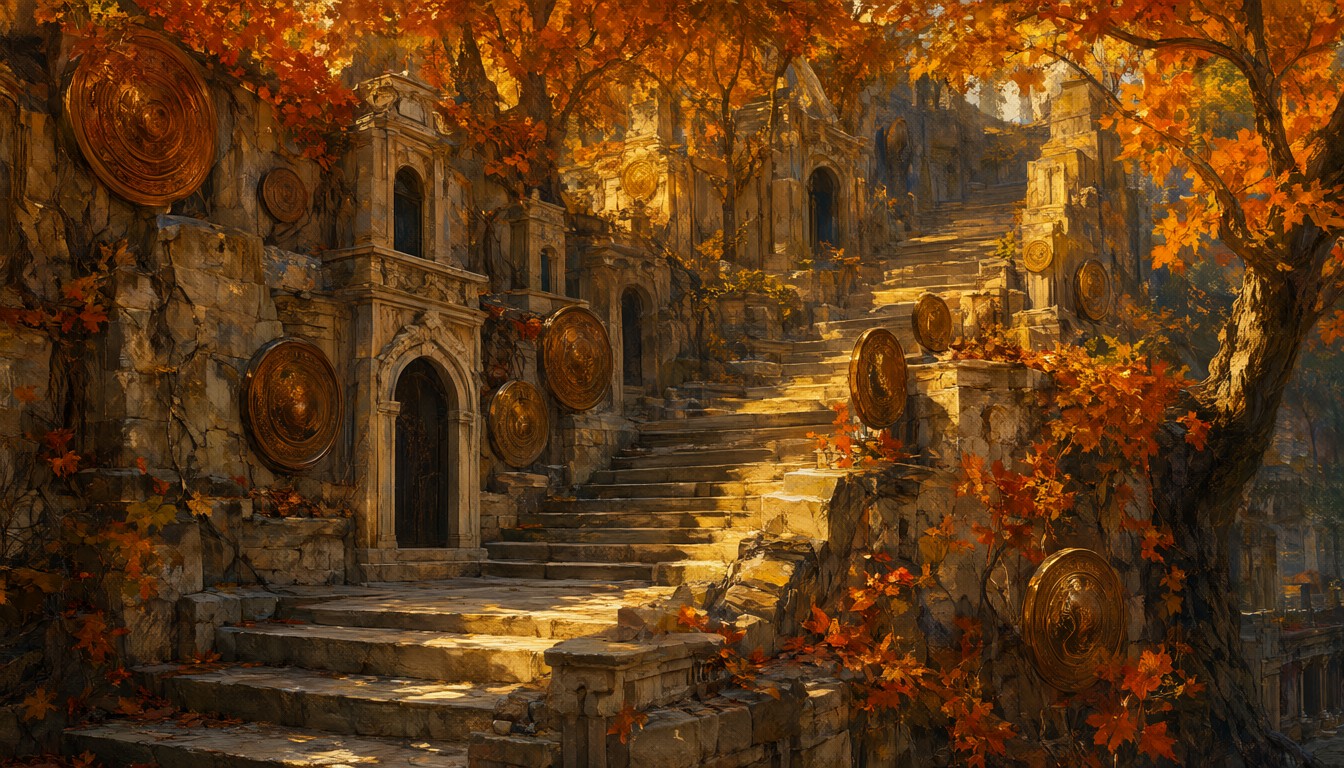
A lesser shrine-road and a set of stepped streets that eventually aim inland, toward Noia's highland sanctuary where the trees never quite finish turning. In the city the Stair is clocks, election-counts, and small chapels where people ask how long a reign will last. Noia is not the state cult. He is the calendar the state cannot quite own.
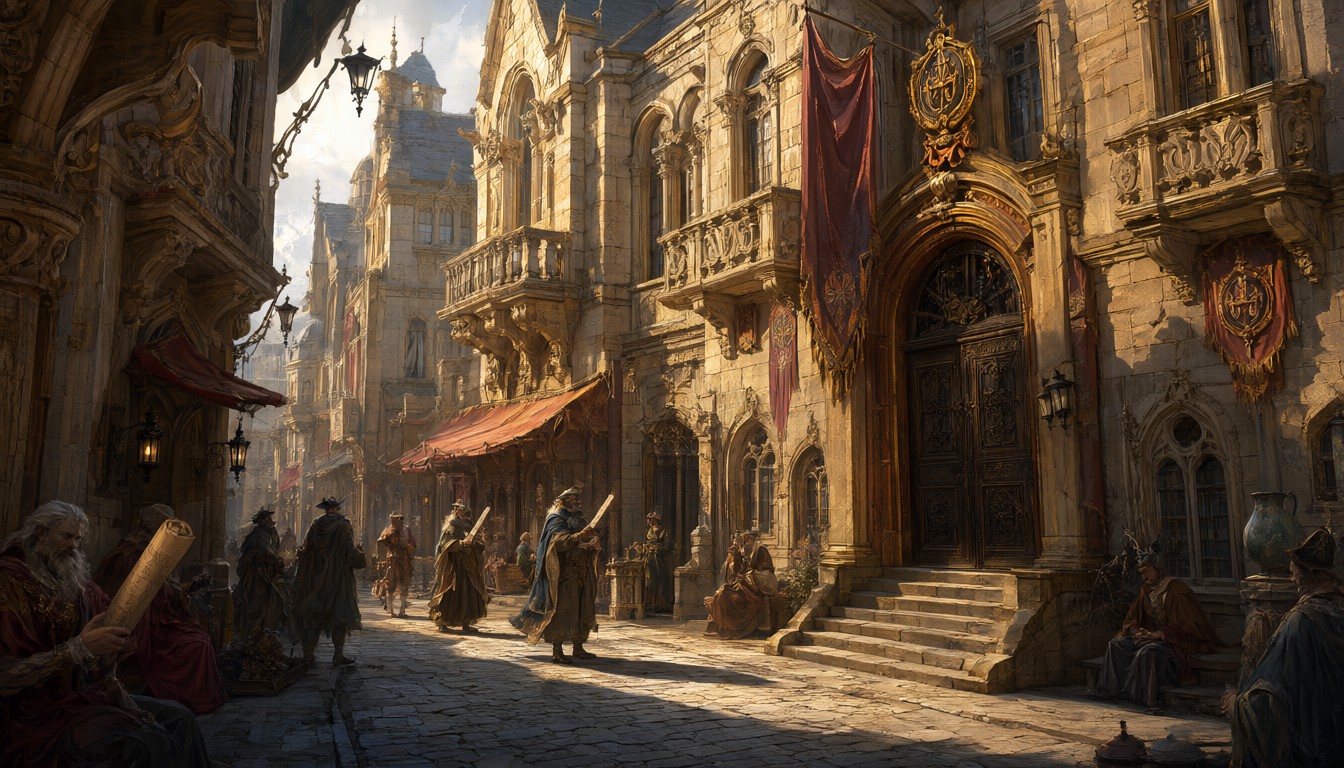
Between Precinct and the upper gate of the Long Walls: markets, ink-sellers, petition-writers, cheap oracles, and the boarding houses where country High Lords stay when they come to vote. One citizen in three has noble blood. Bloodline-hunting factions comb these streets for exactly that reason. A laborer with the wrong grandfather can be bought, married, or removed before the next election.
Iüdex has a house here too. Not a Monitor barracks. A temple. Seug's reading of the Judge is not Voir's. The Monitors are the quarrel. The god is not.
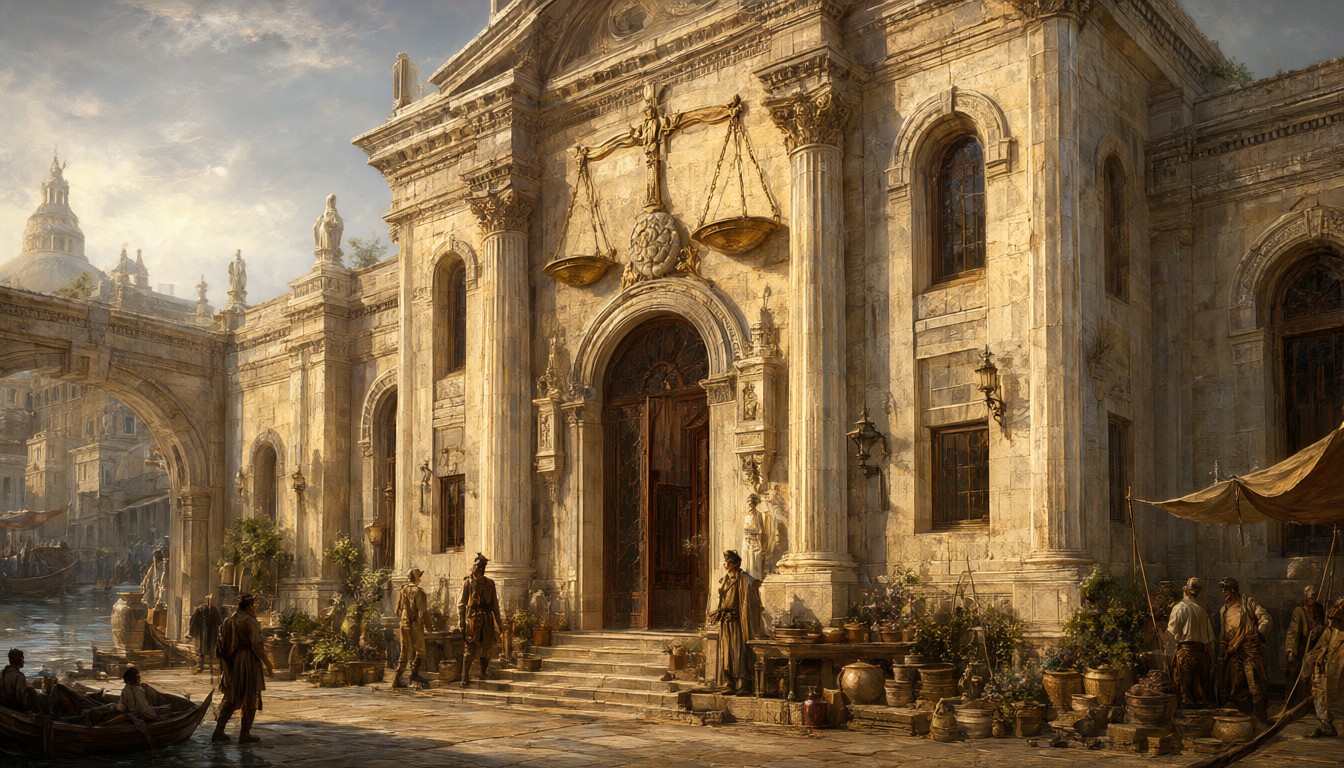
The port of Seug. Louder, saltier, and less interested in whether the man in the Precinct is a god this decade, though the walls that frame it are.
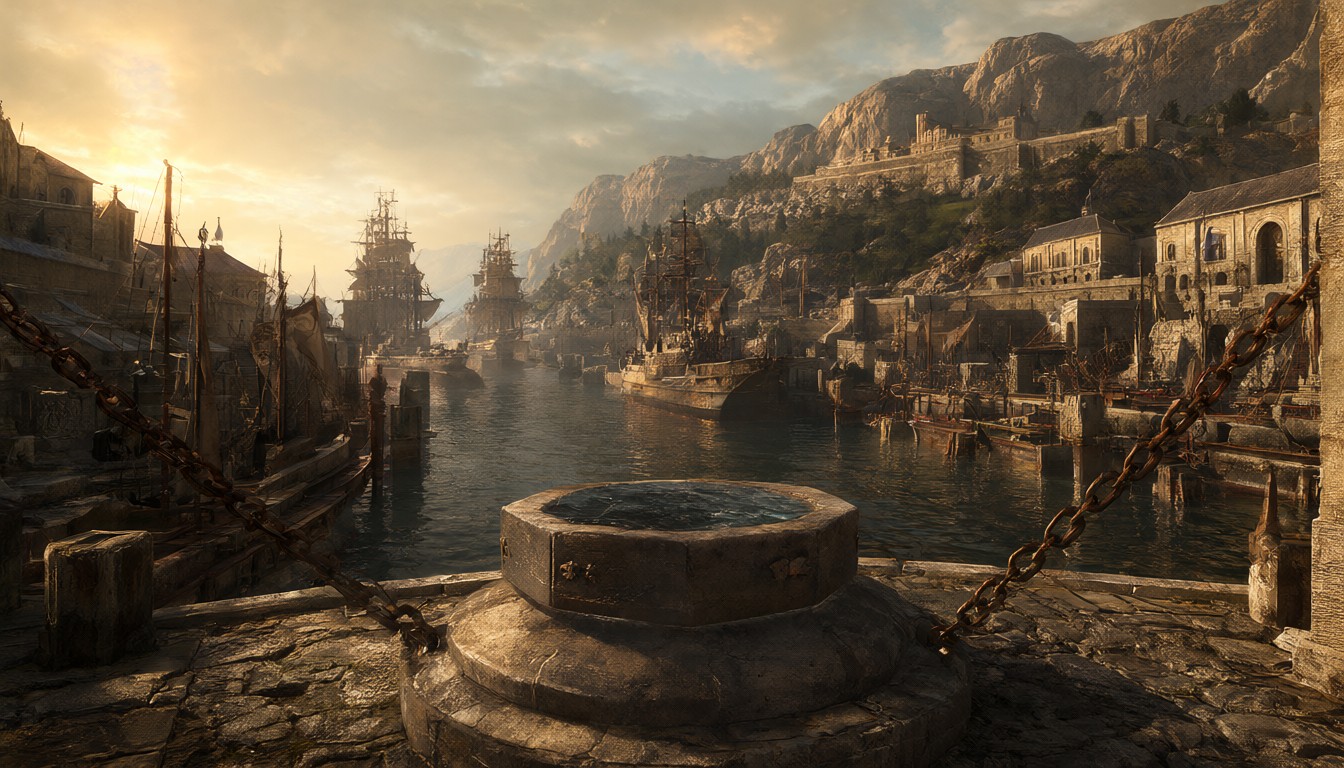
The river mouth is broken into an inner basin, the Crownreach (royal hulls, yards, chain-boom), and outer roads (grain, timber, foreign flags). Moles and cut-stone quays tie the near islands into a single working harbor. The largest lee-island, Anvil Isle, holds the main navy yard: close enough that a fire is visible from the Precinct, far enough that a raid on the docks does not immediately take the throne.
The moles and the island faces are finished work, not raw breakwater. Approached from the Voir Sea, King's Quay reads as the lower jewel of the same city: colored stone, gilded tower-caps, the Four-Mile Walls coming down to the water like a processional that happens to be able to stop an army.
Two parallel curtains, about four miles from the upper city's landward gates to the Quay's landward gate.
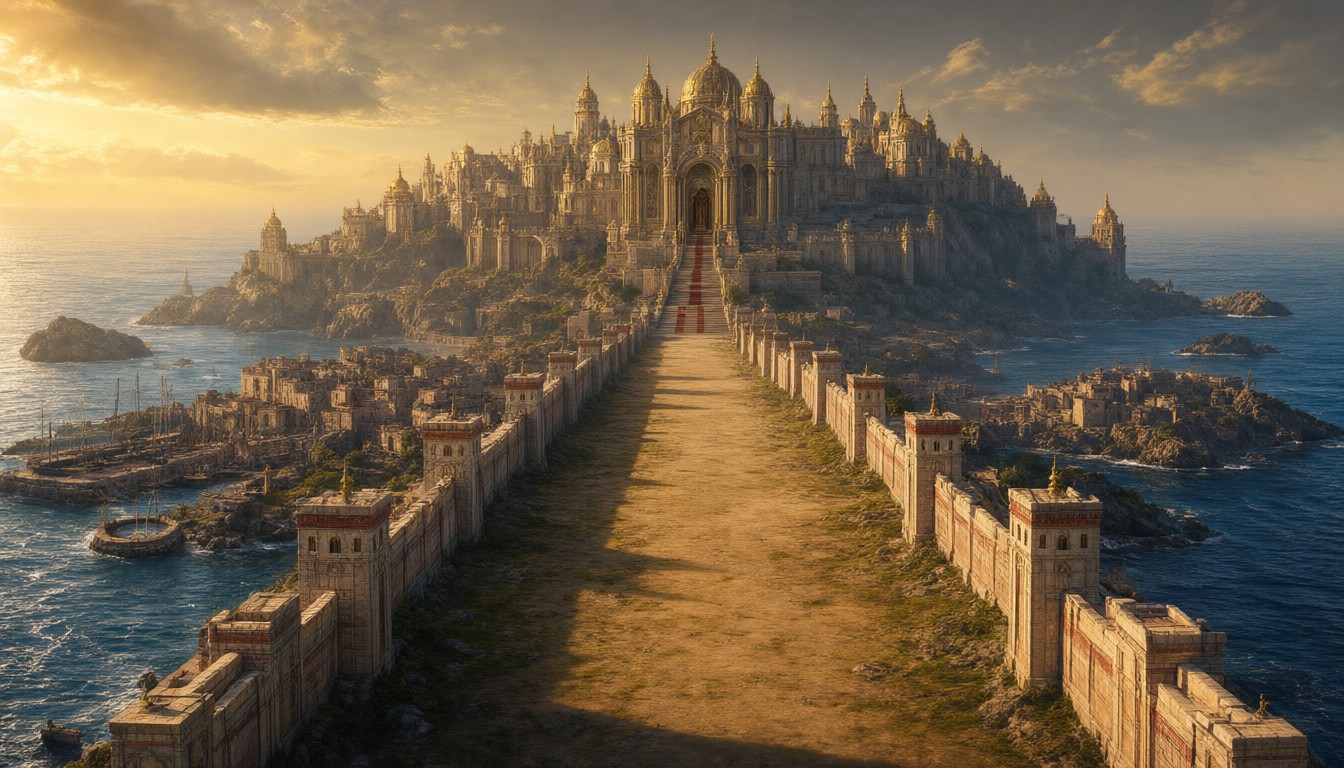
A paved military road runs between them, the Covered Mile (soldiers' name; it is four miles, and only partly covered). Towers at bowshot. Posterns. A way wide enough for a column, carts, and the traffic a capital needs when the highlands are full of other people's scouts.
For part of the run the Homewater is a wet flank. For the rest, open ground any landing would have to cross in view of the towers.
They are Horkos's machine from the years he was still a man, and Seug finished them as a sacred work. Facing stone, reliefs of the twin suns and the seated crown, gilded caps on the towers, gates cut like temple doors. Beautiful on purpose, cream stone banded with faded red: a city that expects to be seen from the sea and from the enemy's deck. Under the finish they are still doubled curtains, a covered road, and a stupid place to try a siege.
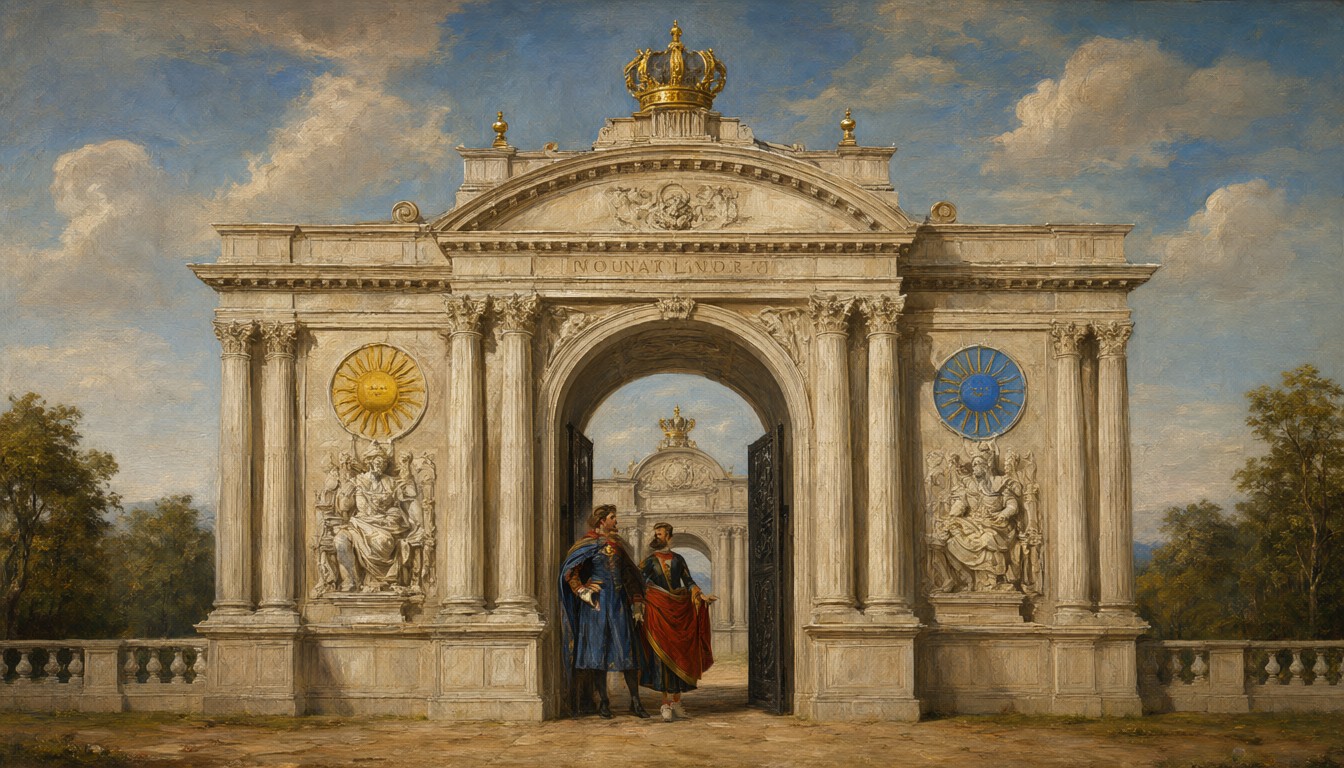
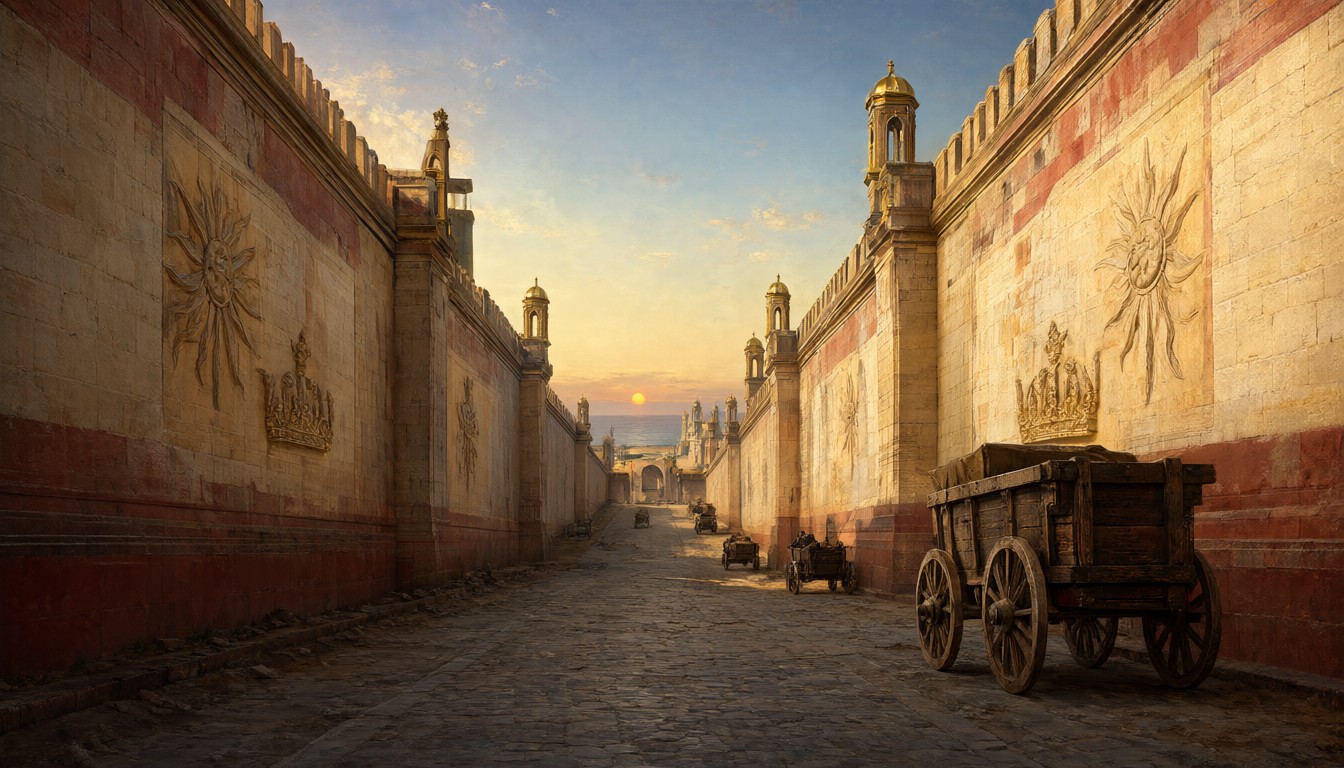
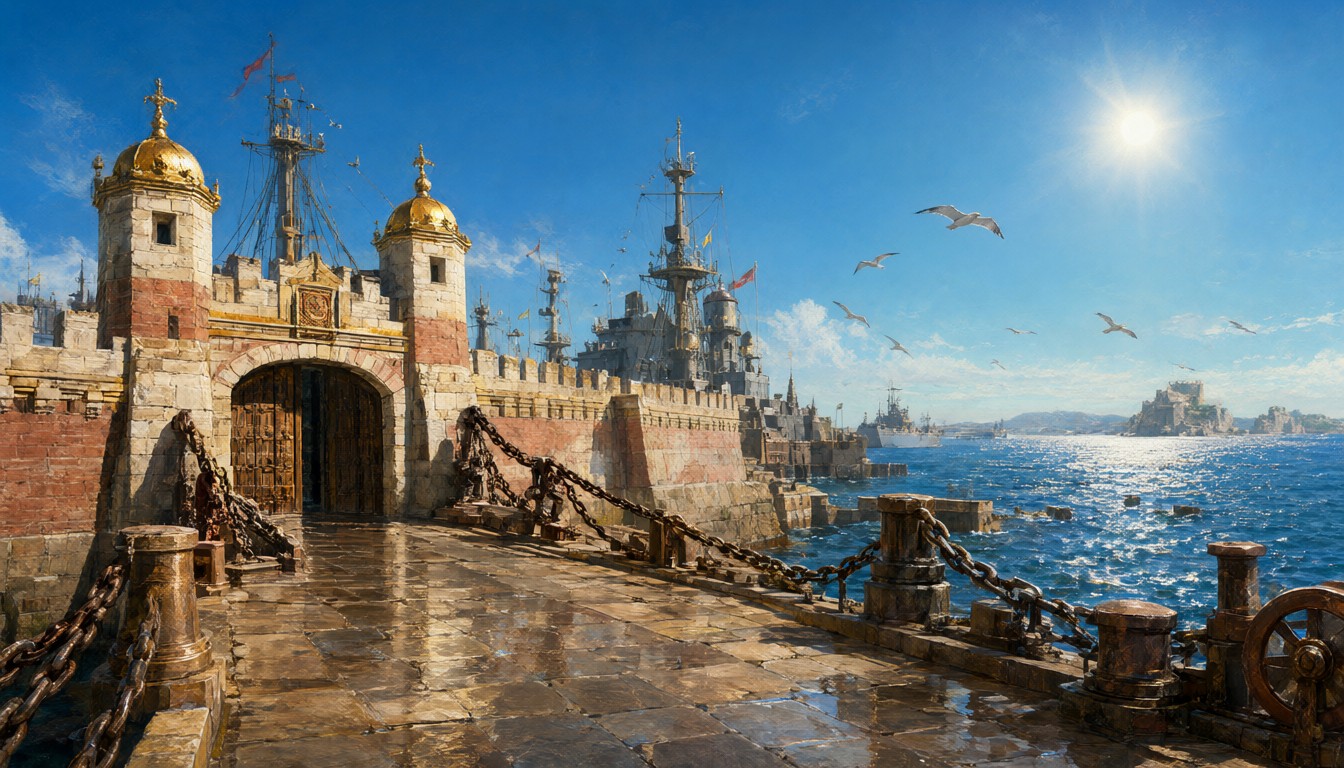
Verdict Gate is the upper, landward gate, the city's own joke at Voir's reading of Iüdex, cut into stone the Precinct has never ordered removed. Saltgate is the harbor end, where the curtains meet the Quay and the road becomes dock.
In the cold war the Walls stay manned, repaired, and walked. Voir does not need the Precinct if it takes the Quay. The Walls are the sentence that keeps that from being cheap.
One king, carved in a spiral, standing for almost nine thousand years.
Khome raised a single column to Horkos. A relief winds up the shaft from base to crown in one unbroken spiral: the election city, the war with Voir, the yards, the moles, and the Walls going up stone by stone. His statue stands on top. The column is almost nine thousand years old, and it has not looked the same in any two ages of that span.
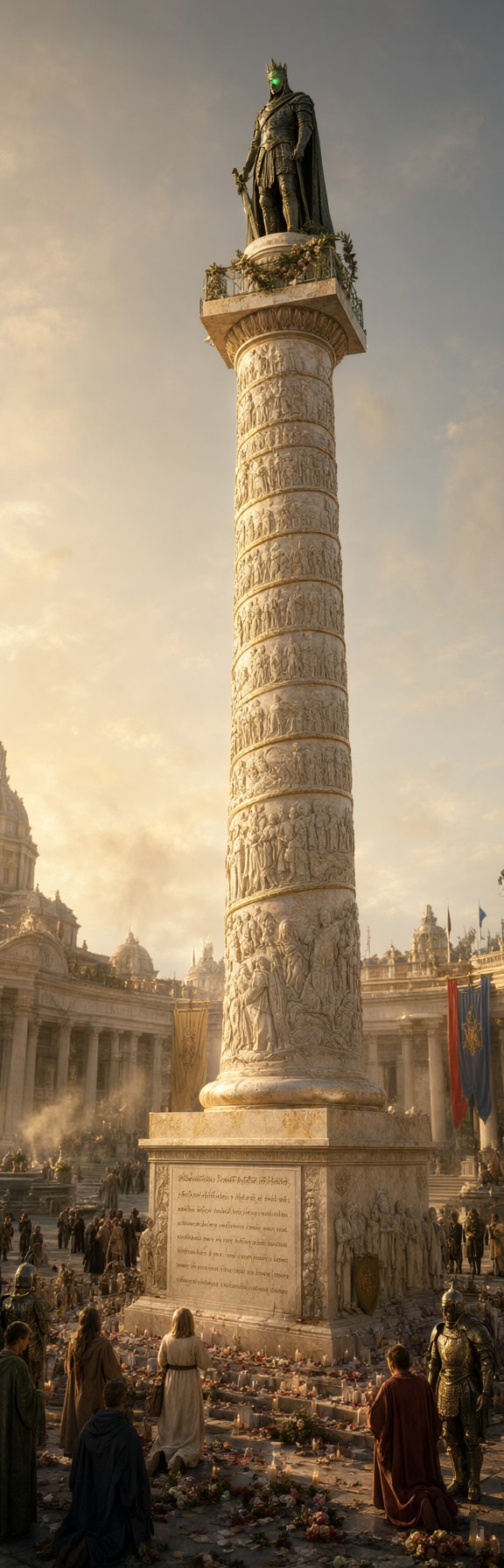
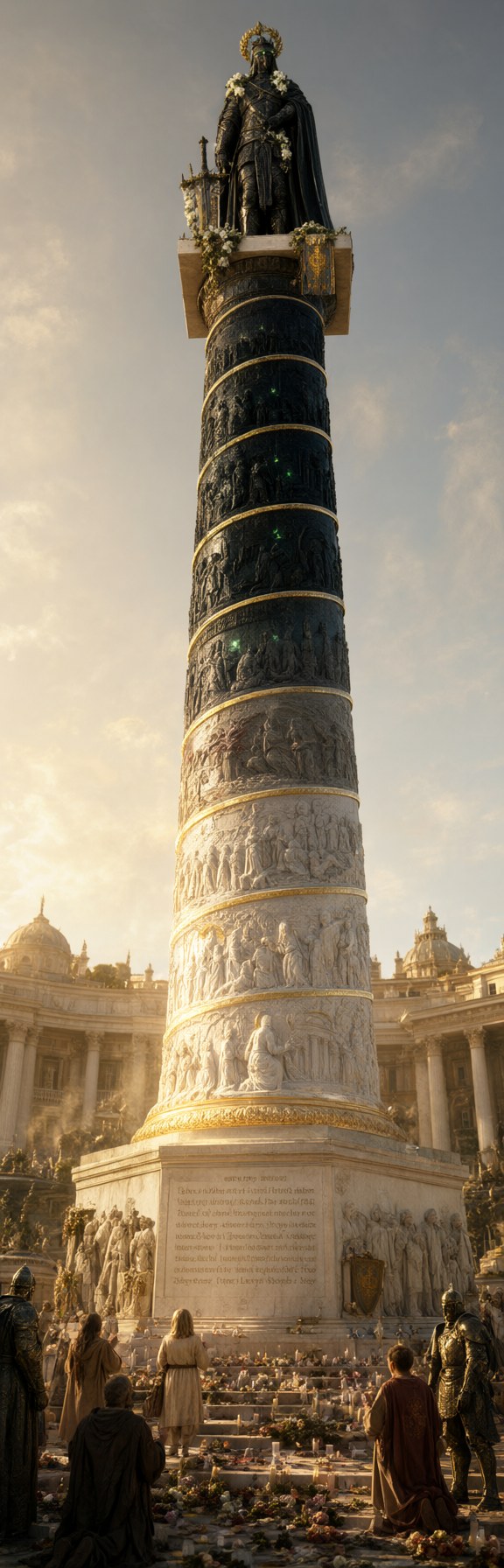
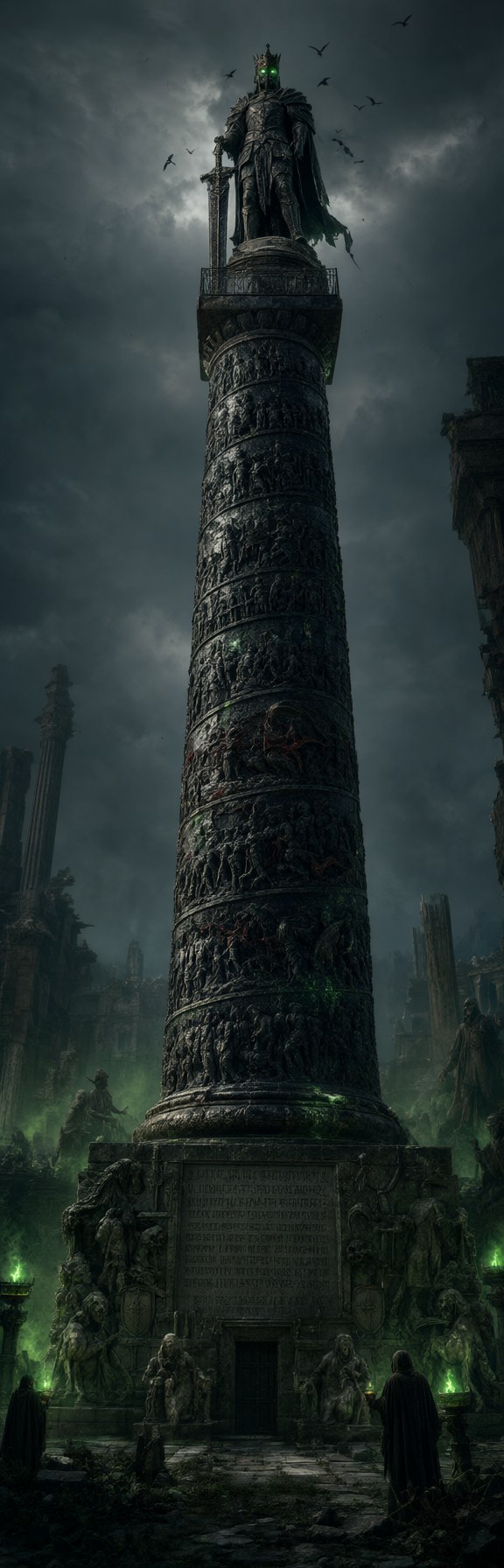
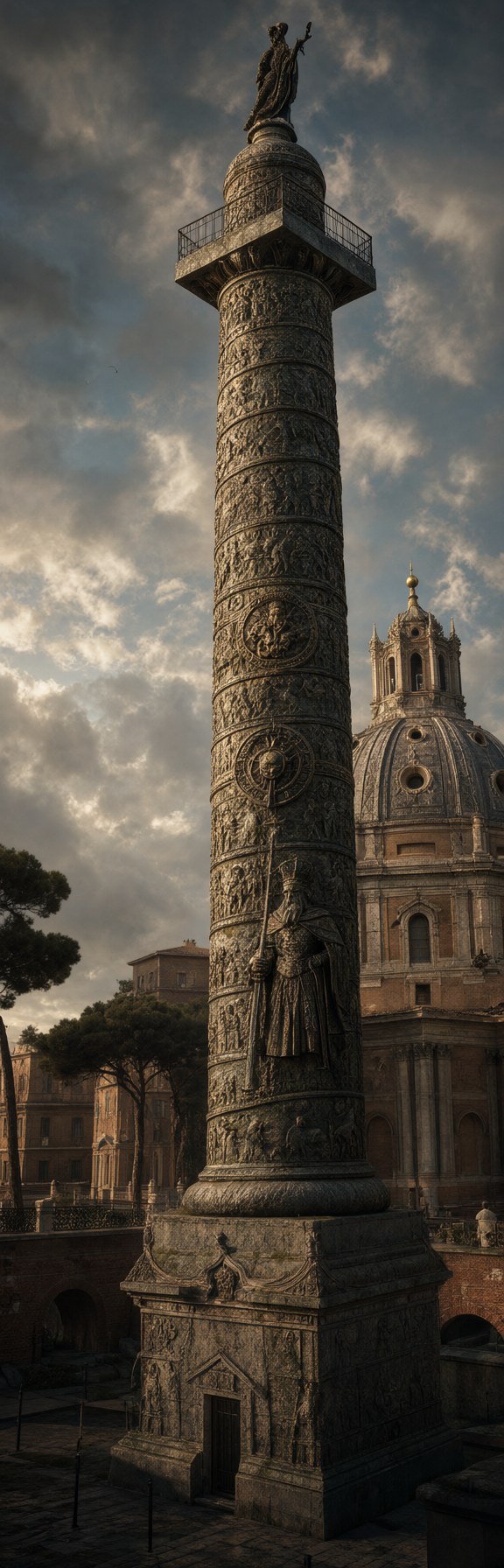
Seug never pulled it down and never sanded the relief smooth. Like the Walls, it is history people walk past every day: a founder's monument, honored in every form he took.
Everyone who matters in Seug, forced into the same few miles.
The city is where all of those people are forced into the same few miles. That is why Khome has more seers per street than most temples, and more knives than either.
Who is worshipped in Khome, where each cult lives, and what it is.
Twin-sun light on pale and gilded stone. The Quay works by tide and by which sun is high. The Precinct works by bells.
Sounds. Yard-hammers, chain, voting bells, street-seers calling prices, river barges, gulls on the basin.
Smells. Pitch, grain dust, incense, wet wool, gold-leaf size, sewage the river only half takes.
People. Nobles who should not walk the River Wards alone, Overlords who own three warehouses and no blood, Voir accents in the Gold, highland pilgrims passing through, navy crews who have never been allowed to forget what the Walls are for, and Iüdex's faithful who will argue a Monitor into the ground and still light the Judge's lamp at dusk.
This is not the open ground war of Horkos's sixty-second year. It is the long afterward.
Ways to put Khome in front of the players.