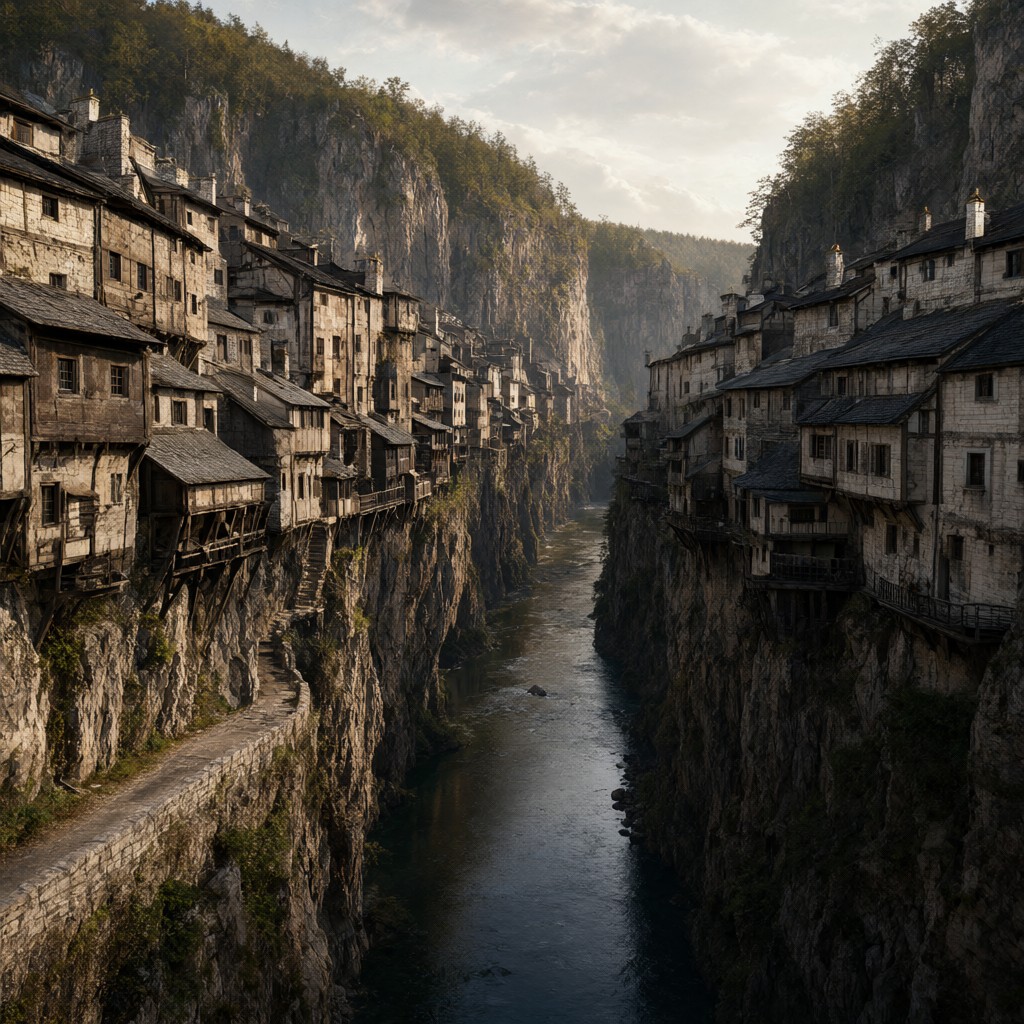
The Salt Ford. One river, one road, a city barely a street wide.
The Salt Ford, southeastern Seug.
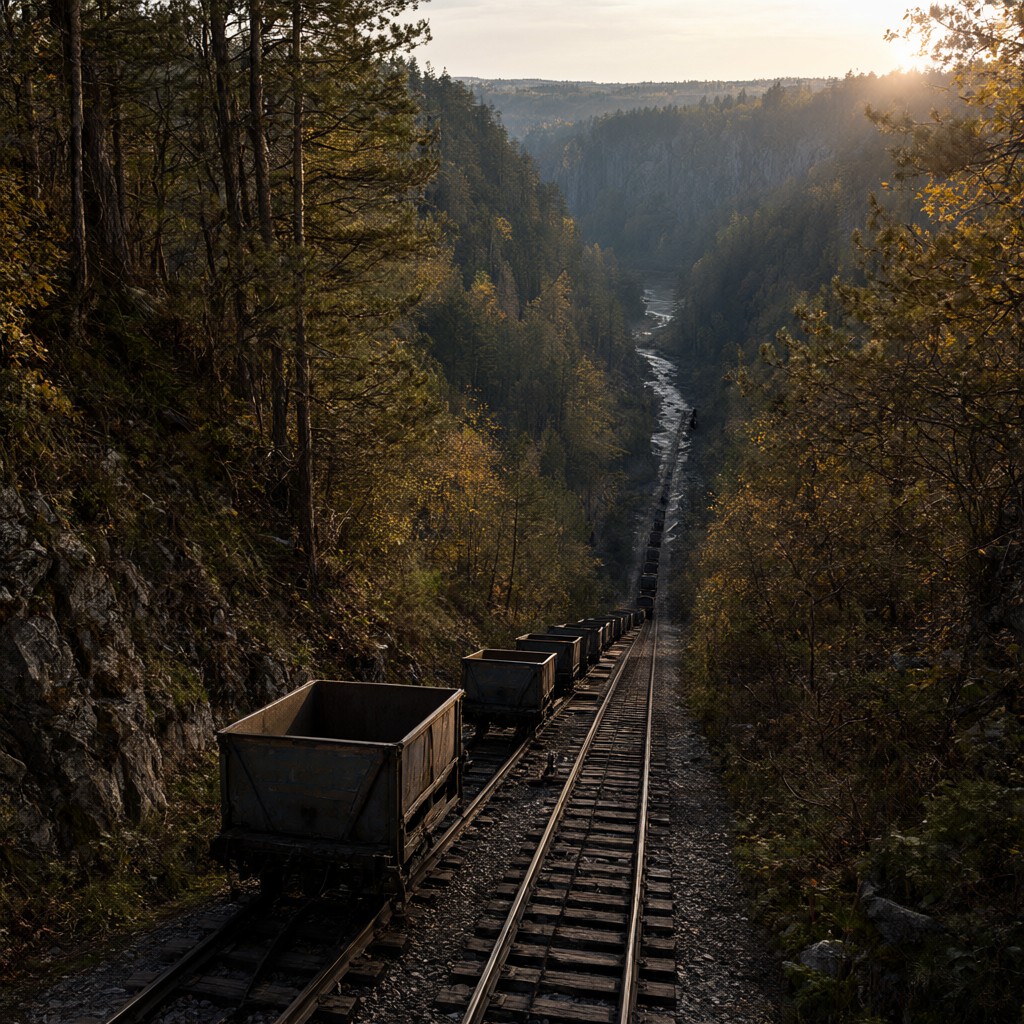
Salthread sits in the southeastern highlands of Seug, where a south-running river cuts a gorge through forested mountains before it reaches the Seug Sea. It is the narrow town of this coast: one river, one road, a city barely a street wide, houses stacked up the cliffs because the canyon will not give them a square.
The old name is the Salt Ford. Time wore it down to Salthread. It is not the capital. It is the thread the south road has to pass through.
The gorge between the highlands and the southern sea.
Southeastern Seug, inland of the Seug Sea, downstream of the highland forests and upstream of the river's mouth. Steep mountains on both banks. The river, local name the Threadwater, runs the length of the town. At the narrows the whole city, water included, is about thirty paces across. At its widest the built strip is still only a few hundred.
Haima is the eastern coast. Darmaine is the lake country. Salthread is the gorge between them and the southern sea: the place caravans, salt, timber, and news have to become a single file.
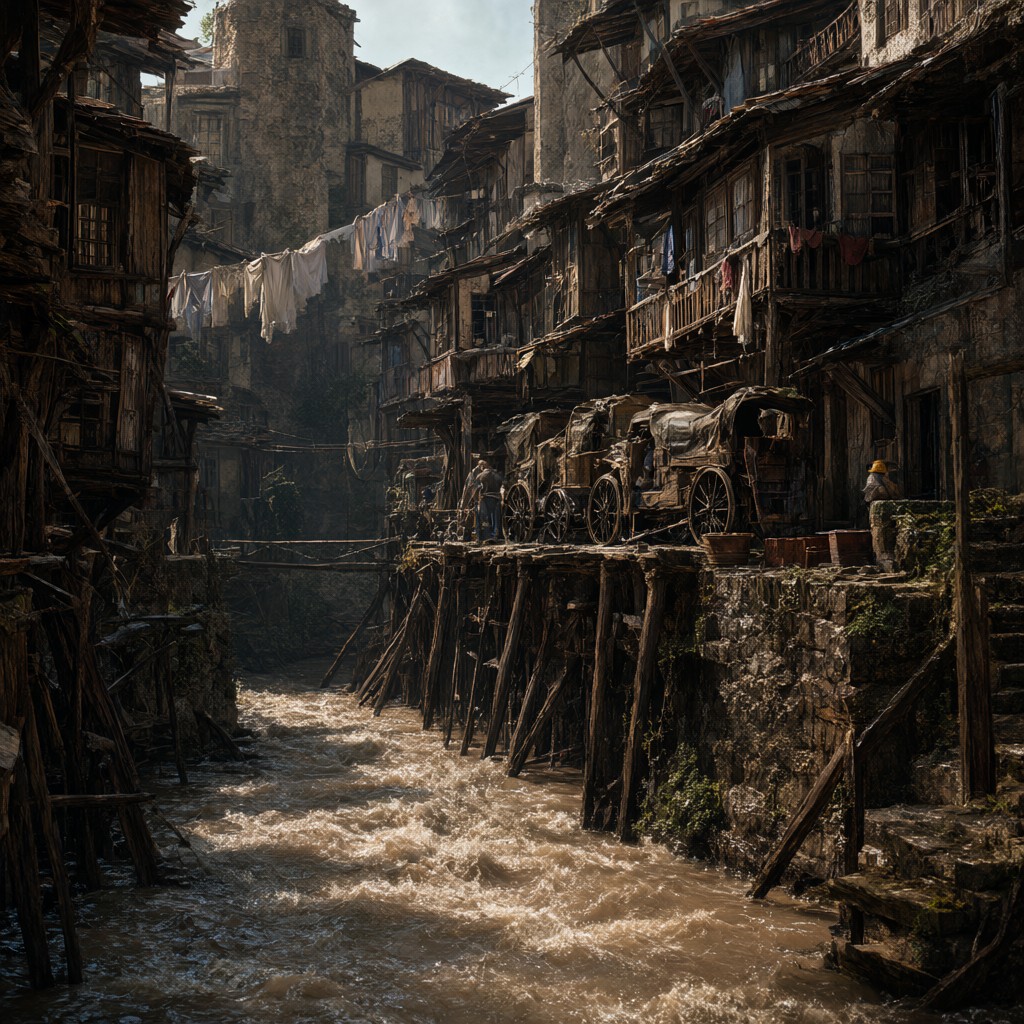
From above it is a ribbon. From the river it is two walls of houses facing each other, balconies almost close enough to pass a cup.
No flat land, so the town is a line, and the line is a toll.
Khome faces Voir. Salthread faces the interior. Its war is tolls, seers, and the river in flood.
One river. One main road on the western cliff, cut into the rock and planked where the rock gave up.
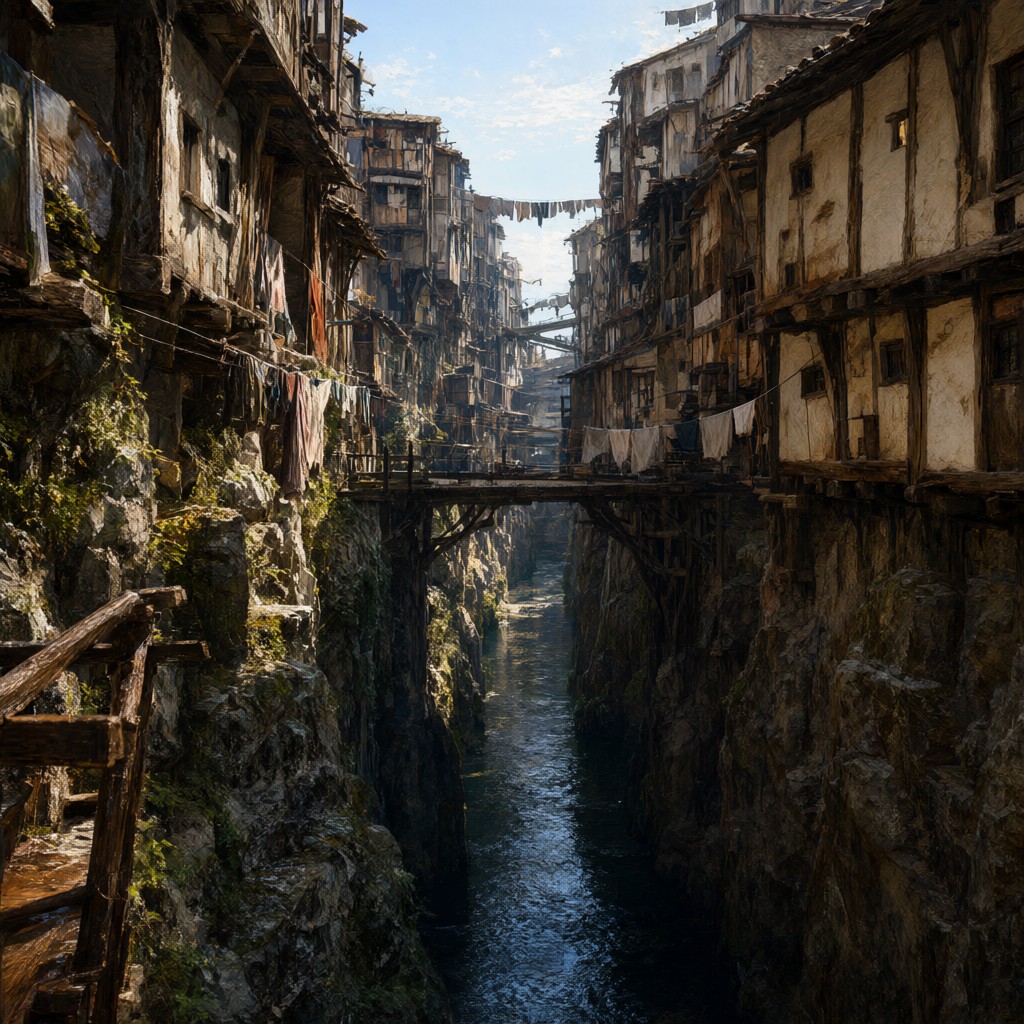
Houses on both walls, east bank and west bank, staring across the water. Stilts over the Threadwater where the bank is only mud. Rooms dug back into the cliff where the bank is stone. Upper floors linked by bridges that are also streets. No square worth the name. The market is a widening of the road.
The narrowest throat is the Thirty Pace, where east eaves and west eaves nearly meet and the river is a dark slot underneath. No one builds a gate there. The canyon is the gate.
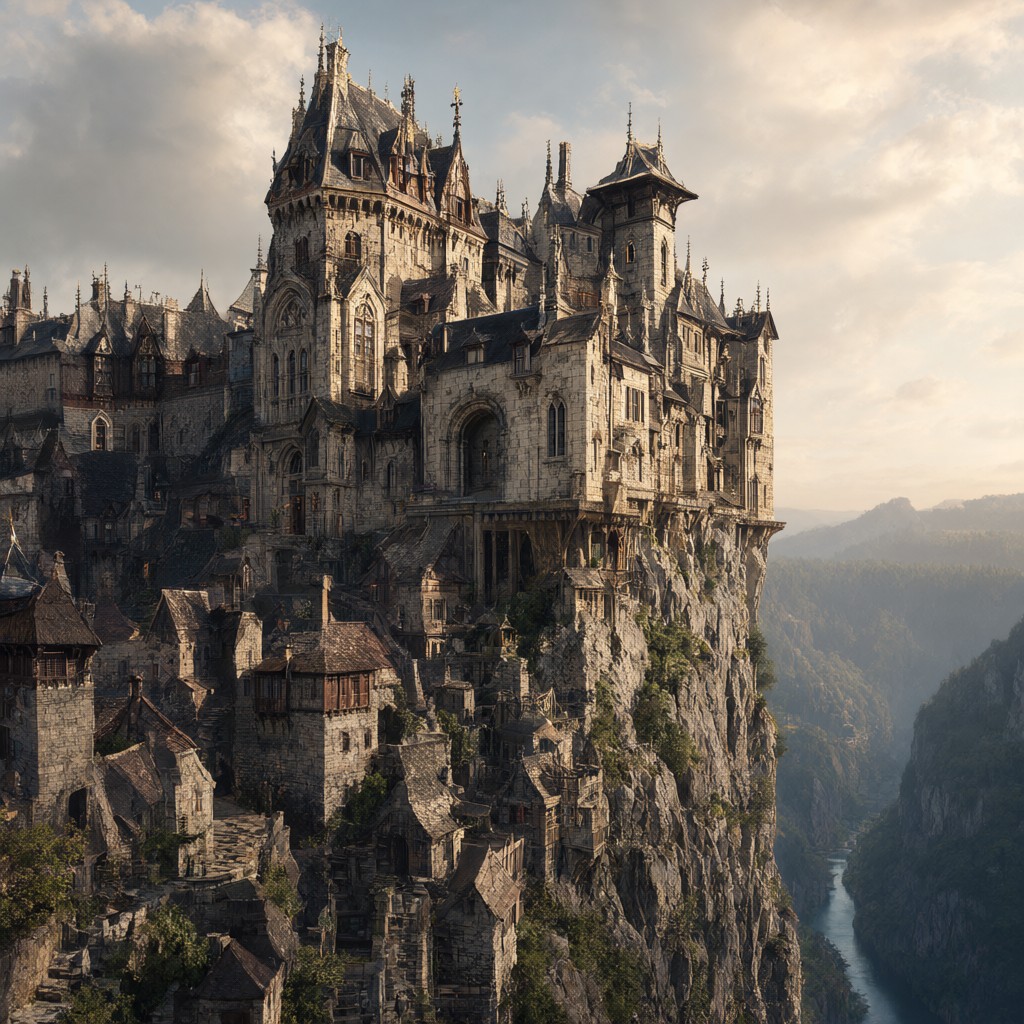
Above the town, on a spur the cliffs allow, sits Fordhall: a vertical seat, not a sprawling keep. Pale stone and dark timber, gilded caps because this is still Seug and a High Lord will be looked at. It is the only building that owns both a view down the ribbon and a view of the road before it enters the cut.
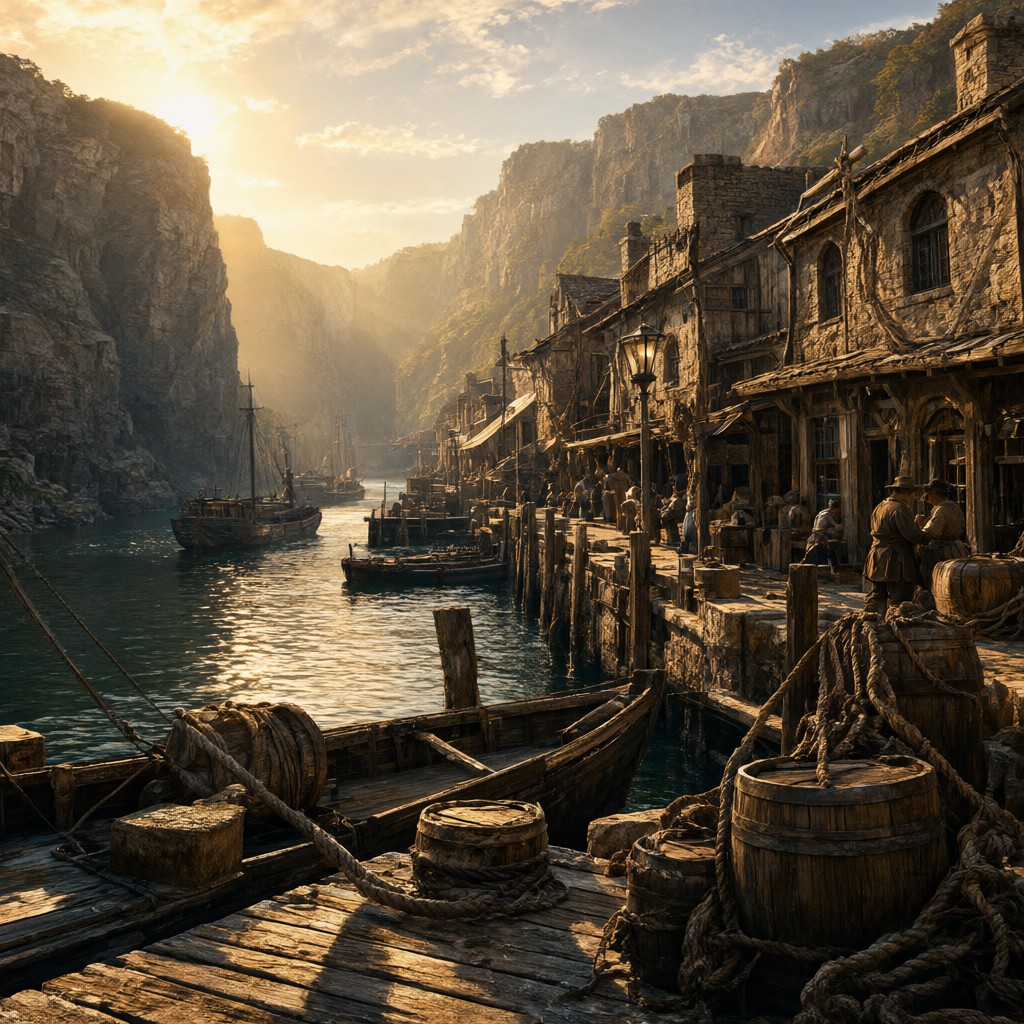
Downstream the canyon loosens into Saltopening, the lower town: warehouses, the salt-count, boat yards for the run to the Seug Sea.
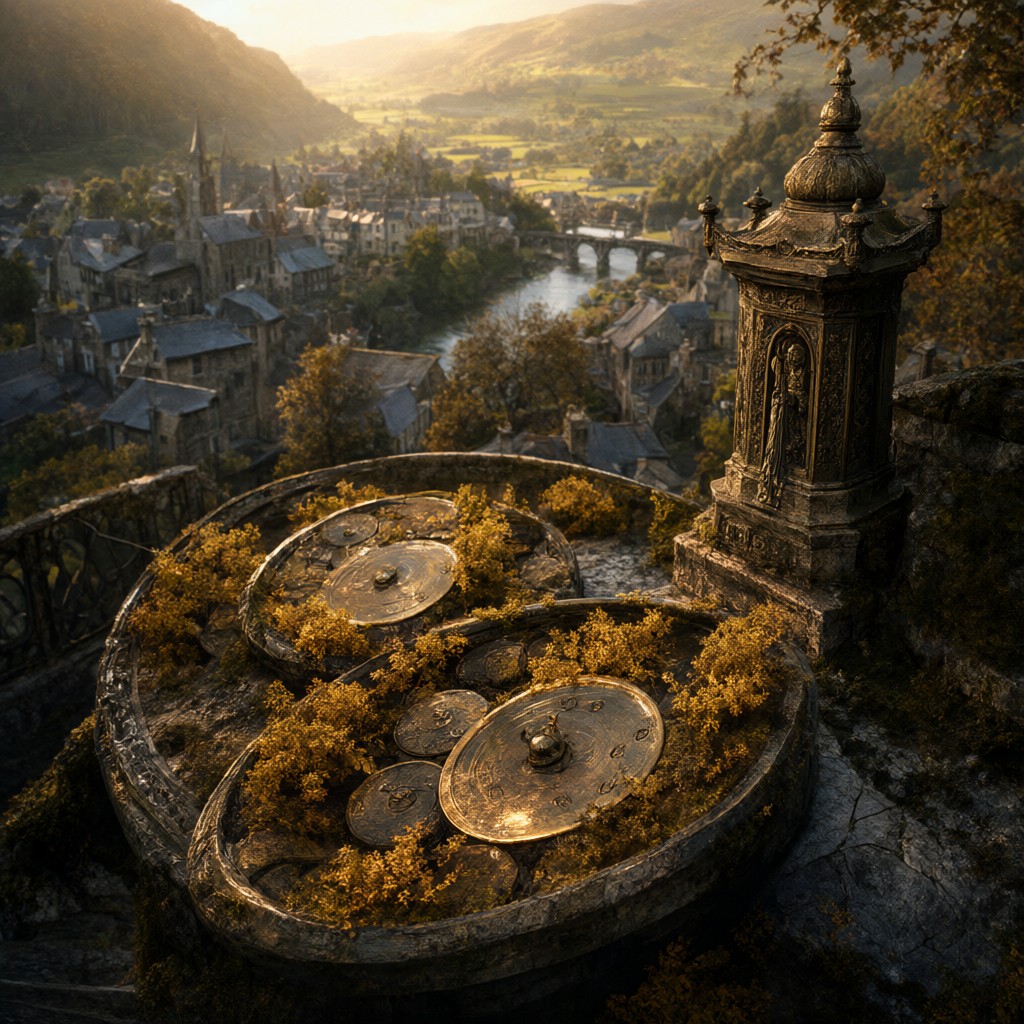
Upstream, the Five-Foot, the highland track, switches down the west wall in turns a cart hates. A viewing stair, the Seven Turn, climbs the east cliff for the one place you can see the whole ribbon.
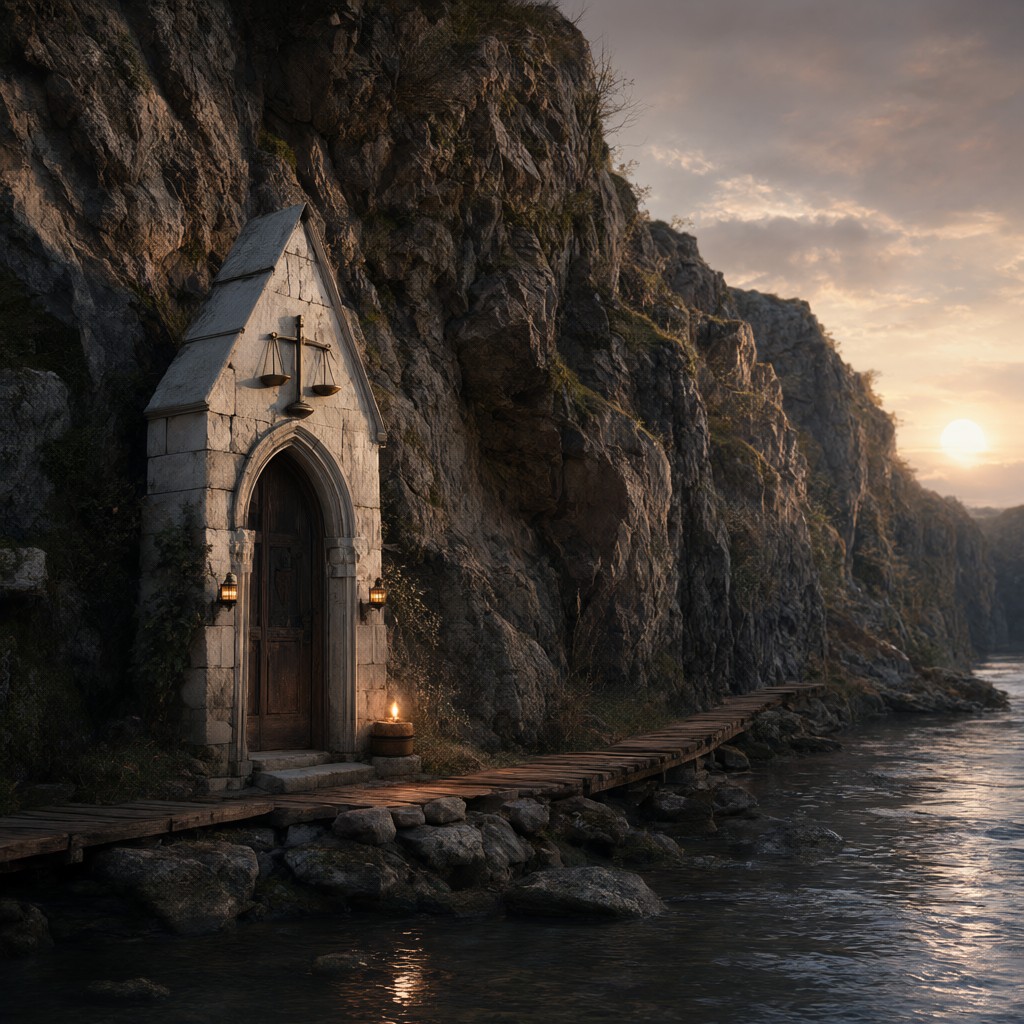
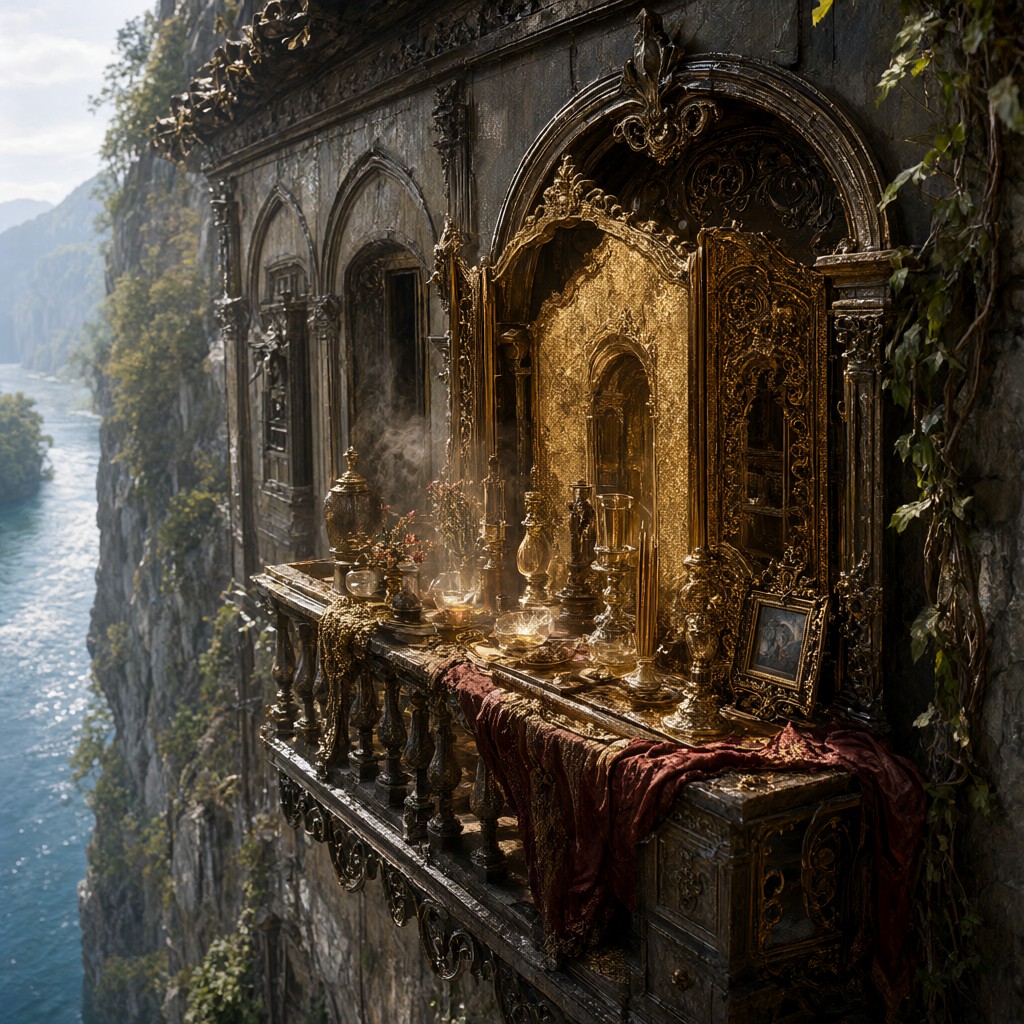
A lamp-chapel, a balcony-shrine, and a niche on the stair.
A lamp-chapel of Iüdex at the ford, scales and warhammer cut small over the door. A Caro Vanta balcony-shrine in the gold-merchant stack, perfume fighting river-damp. A Noia niche on the Seven Turn, because the gorge keeps its own time and the leaves on the rim hold autumn longer than they should. Iüdex is worshipped here as himself. The Monitors are Voir's extreme reading of that god, not the faith.
Twin suns change the town more than they change Khome. In the gold half-year the canyon fills with warm light for a short hour at midday and is shadow the rest. In the azure half-year the slot goes clear and brilliant and the river looks like metal. At night the three moons line up with the gorge so often that Salthread treats it as a calendar: when all three sit in the slot, the ford-toll doubles, by custom older than the current High Lord.
A line-town cannot pretend. Everyone hears everyone.
A seer's vision sold on the west road is known on the east balconies before the buyer reaches Fordhall. Bloodline-hunters hate Salthread and use it anyway: noble by-blows disappear into cliff-rooms, and the Thirty Pace has swallowed more than one inconvenient grandchild.
The High Lord counts salt and carts. The boat-masters in Saltopening count what actually reaches the sea. Those two numbers are not always the same. That gap is the town's real government.
Horkos is a name on the ford-stone, honored the way a country honors the king who kept it, not the subject of the town. Voir is a rumor that arrives by the highland track.
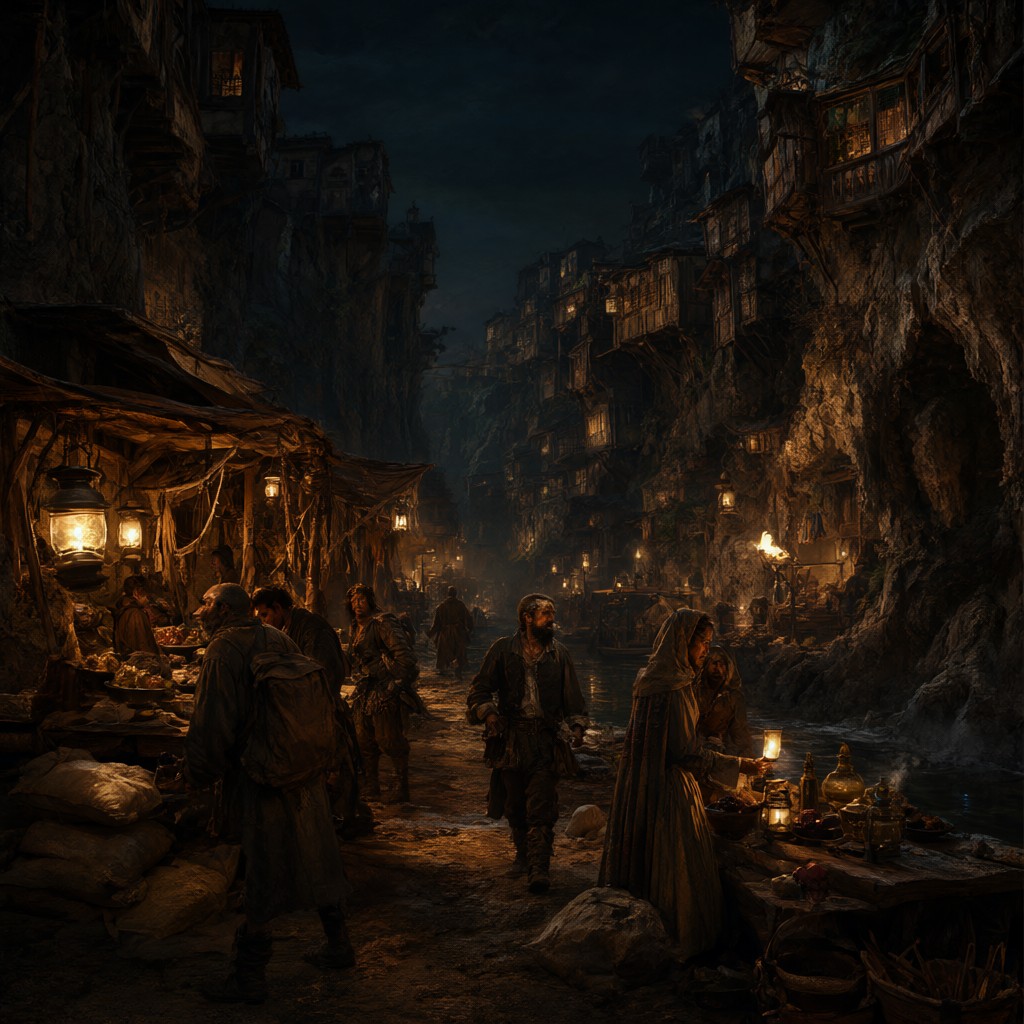
An ordinary day in the gorge.
Sound is the river, all day, and the knock of carts on the single road. Smell is wet stone, salt, pine from the rim, cooking smoke that cannot rise out of the slot. Laundry is a banner from every balcony. Bridges creak. In flood the lower stilts are abandoned in an hour and the town becomes the upper road only.
Ways to put Salthread in front of the players.